



Ganoderma lucidum
Ganoderma lucidum is a large wood-rotting fungus in Basidiomycetes (Basidiomycota), Poraceae (Polyporaceae) and Ganoderma (Ganoderma). Its fruiting body is leathery or woody, and its surface is often cracked. It is named because it grows in the branches of trees. It is an important decomposer in the forest ecosystem, and has attracted much attention in traditional medicine and modern research.
scale-porous bacteria
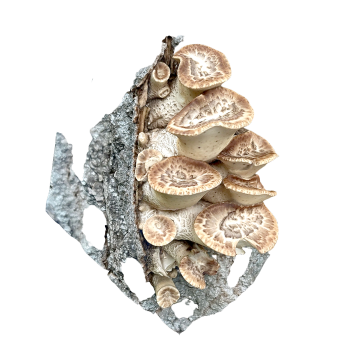
Polyporus (squamosus) is a typical saprophytic fungus of the genus Poromycetaceae of Basidiomycetes, named after the dense scale-like protrusions on the surface of the cap. It is one of the most common wood-rotting fungi in temperate to subtropical forests, playing a key decomposer role in ecosystems, while having traditional medicinal value. Mainly infects broad-leaved trees (such as oak, birch, maple) and some conifers (such as pine) withered standing, fallen or rotten wood.

Polyporus squamosus
Polyporus squamosus, belonging to the family Polyporus, is a medium-sized saprophytic mushroom that inhabits wood and is edible. It is widely distributed and found in North America, Australia, Asia, and Europe, living in hardwood forests. This species was first described by British biologists in 1778 and was named Boletus squamosus at the time. The current name was proposed by Swedish biologist Elias Magnus Fries in 1821 in Systema Mycologicum.

ganoderma lipsiense
Ganoderma lucidum, commonly known as old cow liver, is a globally distributed scaffold fungus. The spore body of this fungus can reach up to 30-40 centimeters (12-16 inches), with a hard texture and woody texture. At the beginning of growth, it appears white, but soon turns deep reddish brown. It grows in the form of mycelium in both live and dead trees. Ganoderma lucidum can grow individually, sporadically, or in groups. Its fruiting body has a diameter of up to 3-30 centimeters, a length of 5-50 centimeters, a thickness of 1-10 centimeters, a hard texture like leather, and a woody texture. The upper surface of the fruiting body is covered with reddish brown conidia.

Scale wax hole fungus on tree stumps
Polyporus squamosus, belonging to the family Polyporus, is a medium-sized saprophytic mushroom that inhabits wood and is edible. It is widely distributed and found in North America, Australia, Asia, and Europe, living in hardwood forests. This mushroom is widely distributed and has been found in the eastern Rocky Mountains of the United States, most parts of Europe, Australia, and Asia. It usually grows in spring, occasionally in autumn, and rarely in other seasons. It often grows in patches, with an area of up to 50 centimeters. It plays an important role in forest ecosystems by decomposing wood, usually elm trees, and rarely parasitizes living trees.
Yunzhi
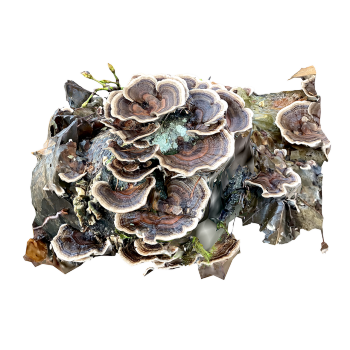
Yunzhi is one of the most medicinal fungi, with functions such as clearing heat, detoxifying, anti-inflammatory, anti-cancer, and hepatoprotective. Yunzhi, also known as "turkey tail", has very recognizable features. It may be a forest fungus named after a bird, named after local features rather than the whole. The fruiting body of the colored velvet cap fungus is one year old. Leafy to semi fibrous, lateral without stems, often covered in tile like folds, often connected to the left and right, the fruiting bodies that grow on the cross-section of the stump or fallen wood often enclose in a lotus seat shape.

Popular Models
Honey Badger (3D animated model)
192 View
Guinea fowl (3D animated model)
163 View
Wild Goose (3D animated model)
185 View
Red Fox (3D animated model)
153 View
Random Model

Octopus (with 3D animated model)
1390 View

Traditional Chinese Red Lantern
936 View

Serval Antelope Skull Specimen
793 View

Abandoned industrial cooling towers
621 View
Mediterranean pine 3D model
1299 View

Three-seat electric recliner sofa
688 View


Copper Chinese dragon vase
842 View